Fill dirt.
For filling low spots, raising ground, and rough grading.
The Dirt Dealer
Dirt. Rock. Hauling. Dump sites.
Bring your project together.

Your materials. Your moves. Your hand.
The whole picture.
Every project has its own hand.
Start with what you need.
Bring the rest together.
Dirt
Fill dirt for building up. Topsoil for growing in. Choose the material that fits what comes next.
Rock & gravel
From driveway access to a new path, start with the rock or gravel that makes sense for the job.
Hauling
Keep incoming deliveries and outgoing material in one clear plan. Separate quantities. A complete picture.
Dump sites
Need a receiving site or have one in mind? Add it to your plan, with acceptance and access to confirm before hauling.
The material difference.
Different textures. Different jobs.
The foundation of a well-planned project.

For filling low spots, raising ground, and rough grading.
For lawns, landscape beds, and a fresh growing layer.
For driveways, paths, access, and dependable base layers.
Materials shown are illustrative. Confirm material type, suitability, and availability for your project.
Made to work together.
A simple delivery or the full project.
Choose a combination.
Make it your own.
Material + hauling
One material. A plan to move it.
Two materials + hauling
Each material. Its own move.
Material + haul + destination
A complete plan for moving out.
All four suits
The big picture. All together.
Each hand is a starting point, not a fixed package. Quantities, hauling arrangements, and site acceptance need to be confirmed before work begins.
Every move matters.
What comes in. What goes out.
One place to see it all.
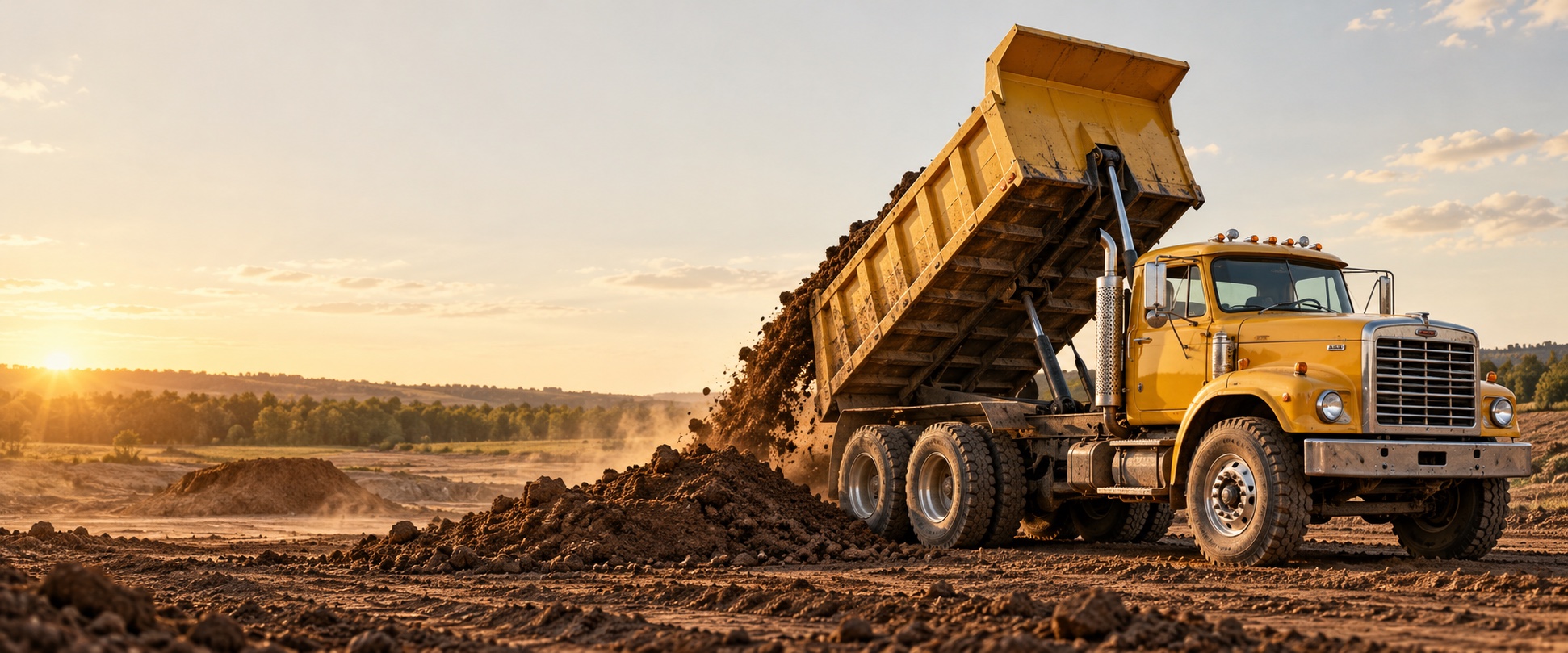 A look at the work ahead.
A little clarity.
Fill dirt is generally used to build up or reshape ground. Topsoil is the upper growing layer, commonly used for lawns and landscaping. The right choice depends on what you’re building or growing.
Use the project planner to enter dimensions or a quantity you already know. Add each material or area separately. For an irregular area, split it into rectangles and add a line for each one. You can leave a quantity unknown until you have the measurements.
Your draft is saved in this browser on this device when local storage is available. Download or copy a summary to keep a separate copy. Clearing browser data removes the saved draft. Saving a plan does not send a request or place an order.
Plan a clear route, firm ground, enough overhead clearance, and an accessible place to unload. Gates, slopes, soft ground, and overhead lines all matter. Confirm access and the unloading location with your hauler before scheduling.
Yes. Select hauling or a receiving-site option in the planner, even without a material quantity. You can save the plan and add details later. Site acceptance, access, and fees still need confirmation.